

Losing a tooth will impact more than just how you look; it can shift your bite and impact how you speak and eat.
While modern implants are popular, a dentist in Englewood Cliffs, NJ, will often recommend dental bridges as a reliable, non-surgical alternative to restore full oral function.
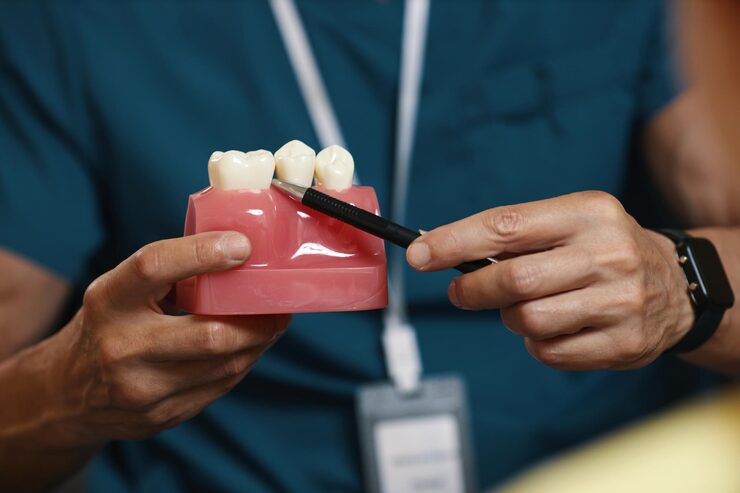
These prosthetics work by using the healthy teeth on either side of a gap as anchors to support a custom-made artificial tooth, effectively “bridging” the space and preventing neighboring teeth from drifting out of alignment.
How Do Dental Bridges Function?
A dental bridge consists of two main components: the abutments and the pontic. The abutments are the natural teeth on either side of the space that act as the foundation, while the pontic is the replacement tooth that fills the gap.
During the procedure, your provider carefully prepares the anchor teeth and takes a digital impression to ensure the new bridge matches the exact contour of your smile.
This fixed solution is then cemented into place, providing a stable surface that feels and functions much like your original teeth.
What Makes Bridges A Preferred Choice For Many?
One of the primary reasons patients choose dental bridges in Englewood Cliffs is the speed of the treatment. Unlike other replacement options that require multiple surgeries and months of healing, a bridge can typically be completed in just two visits.
This makes it an excellent choice for individuals who want an immediate aesthetic improvement or those who may not be ideal candidates for surgery due to underlying health conditions or insufficient jawbone density.
Are There Different Types Of Dental Bridges Available?
While traditional bridges are the most common, modern dentistry offers several variations to suit unique clinical needs. If you only have one natural tooth available for support, a cantilever bridge may be used.
For those seeking a more conservative approach for front teeth, a Maryland bridge utilizes a discreet metal or porcelain framework that bonds to the back of the teeth without the need for extensive reshaping.
There are also implant-supported bridges, which use small titanium posts instead of natural teeth for support, offering maximum stability for larger gaps.
| Feature | Traditional Bridge | Dental Implant |
|---|---|---|
| Treatment Time | 2–3 Weeks | 3–6 Months |
| Surgical Required? | No | Yes |
| Jawbone Preservation | No | Yes |
| Adjacent Teeth Affected | Yes (Reshaped) | No |
| Initial Cost | Lower | Higher |
How Do You Maintain A Dental Bridge?
To ensure the longevity of your restoration, a consistent oral hygiene routine is vital. Because the bridge is a single unit, you cannot floss between the teeth in the same way you normally would.
Instead, you must use a bridge threader or an interdental brush to clean underneath the artificial tooth and around the base of the supporting crowns.
Keeping the gum line clear of plaque prevents decay in the anchor teeth, which is the most common cause of bridge failure over time.
When Should You Seek A Professional Consultation?
If you are dealing with tooth loss, the best way to determine your eligibility is to visit a dental office near you for a comprehensive exam. A professional can assess the strength of your surrounding teeth and your overall gum health to create a personalized treatment plan.
By addressing this gap early, you will not only improve your confidence, but you can also protect your jaw health in the long run by distributing your chewing force evenly across the remaining teeth.
Restoring Your Smile With Confidence
Choosing to replace a missing tooth is a significant step toward maintaining your overall well-being.
Choosing a timely solution that combines beauty with functional ability can help you regain the ability to eat your favourite food and speak without any fear.
A well-designed prosthetic does more than fill a gap; it provides the structural support your mouth needs to stay healthy for decades to come.
At Lee Dental & Facial, we specialize in creating durable and life-like restorations that blend seamlessly with your natural smile. Our team is committed to helping you understand every step of the restorative process so you can make the best choice for your health.
If you are ready to reclaim your smile, we invite you to contact us today to schedule your consultation.
FAQs
How long does a dental bridge typically last?
With proper care and regular professional cleanings, a dental bridge can last between 10 and 15 years. Maintaining the health of the supporting natural teeth is the key to their durability.
Is the process of getting a bridge painful?
Not at all. The preparation of the anchor teeth is performed under local anesthesia to ensure you are comfortable. Most patients only report mild sensitivity for a few days following the final placement.
Can a bridge be replaced if it breaks?
Yes. If a bridge becomes loose or the porcelain chips, it can often be removed and replaced with a new custom-made version to restore the integrity of your bite.
Will people be able to tell I have a bridge?
Modern bridges are crafted from high-quality porcelain or ceramic that mimics the translucency of natural enamel. Once placed, the bridge is virtually indistinguishable from your natural teeth.